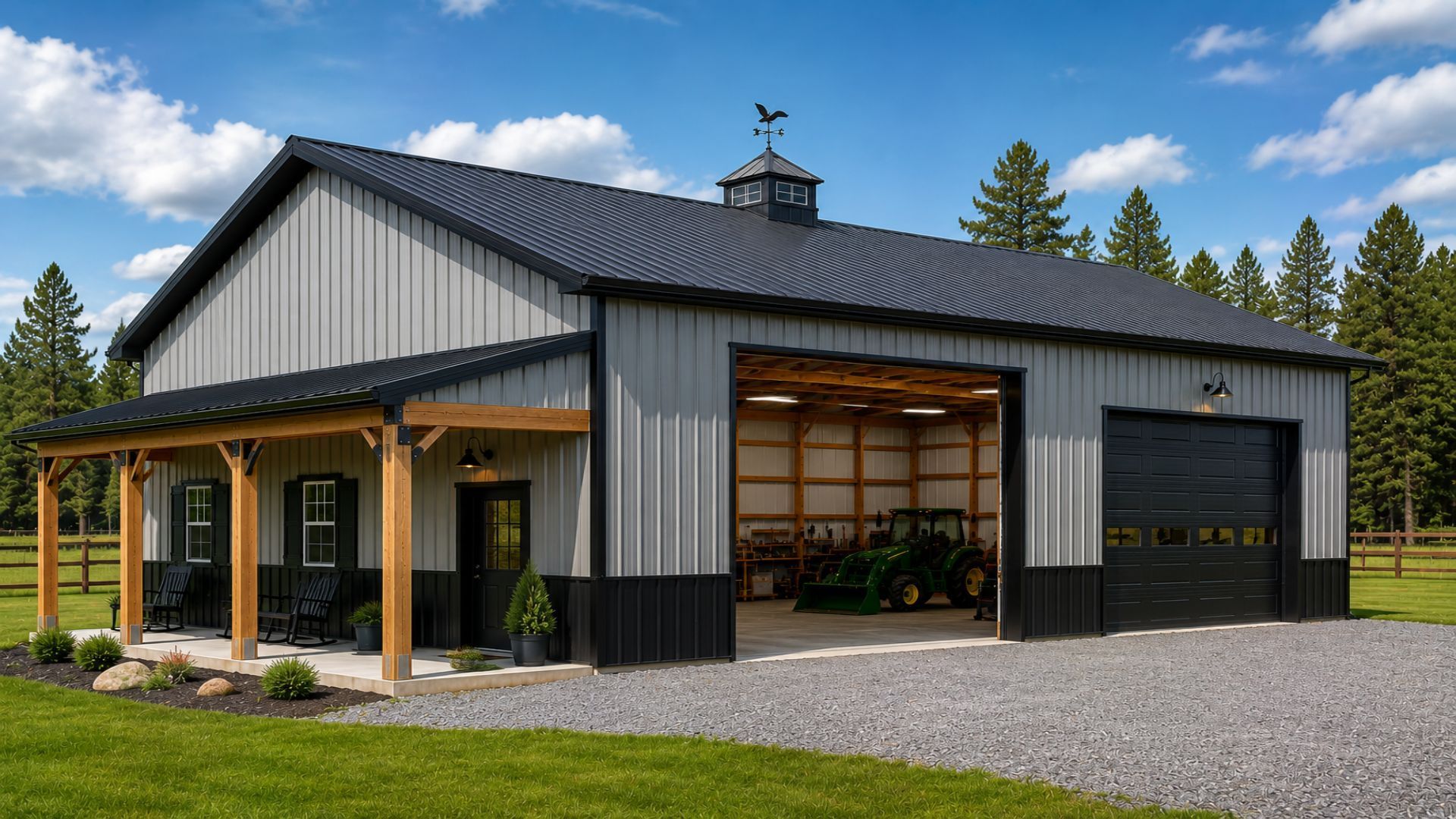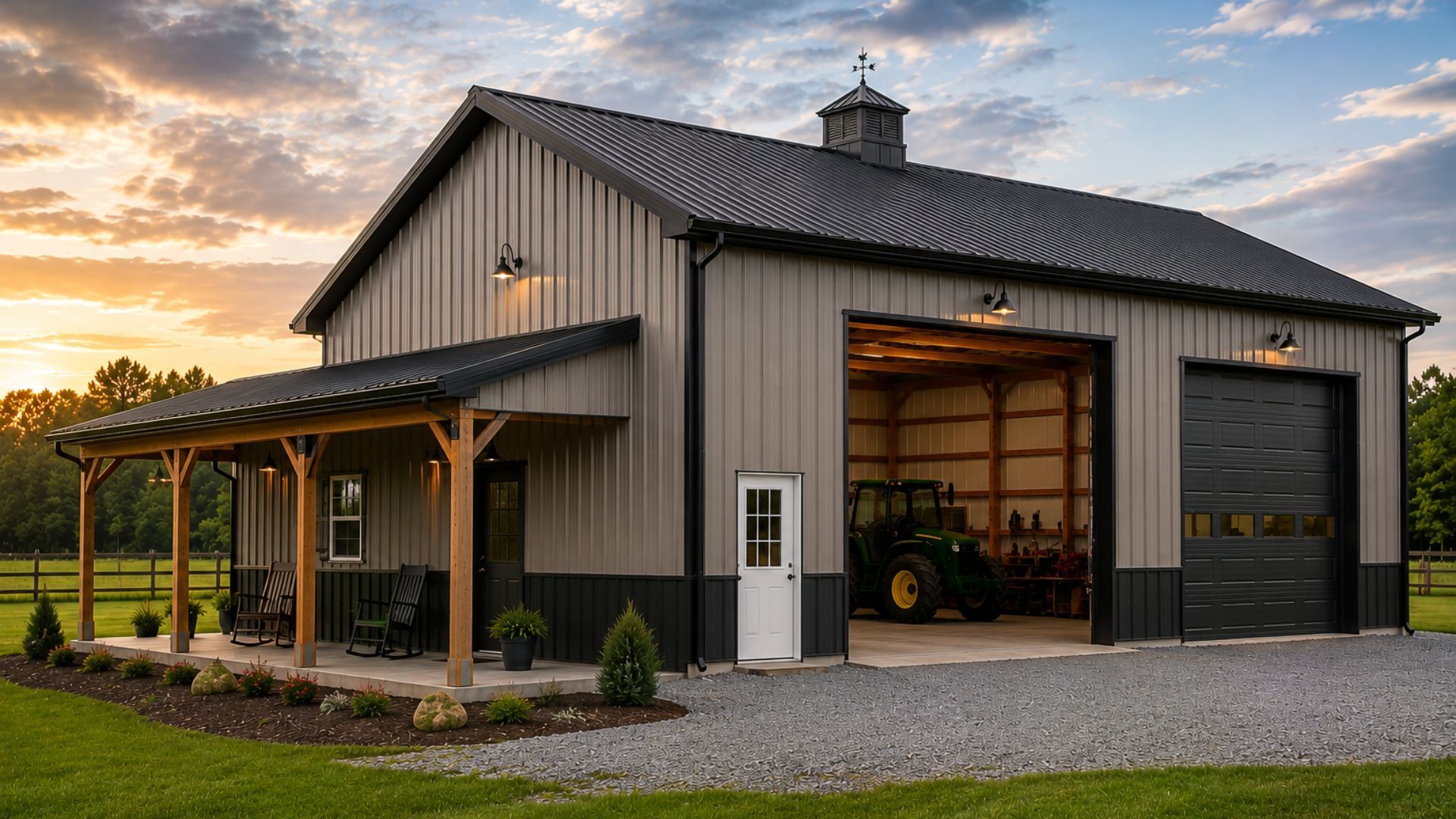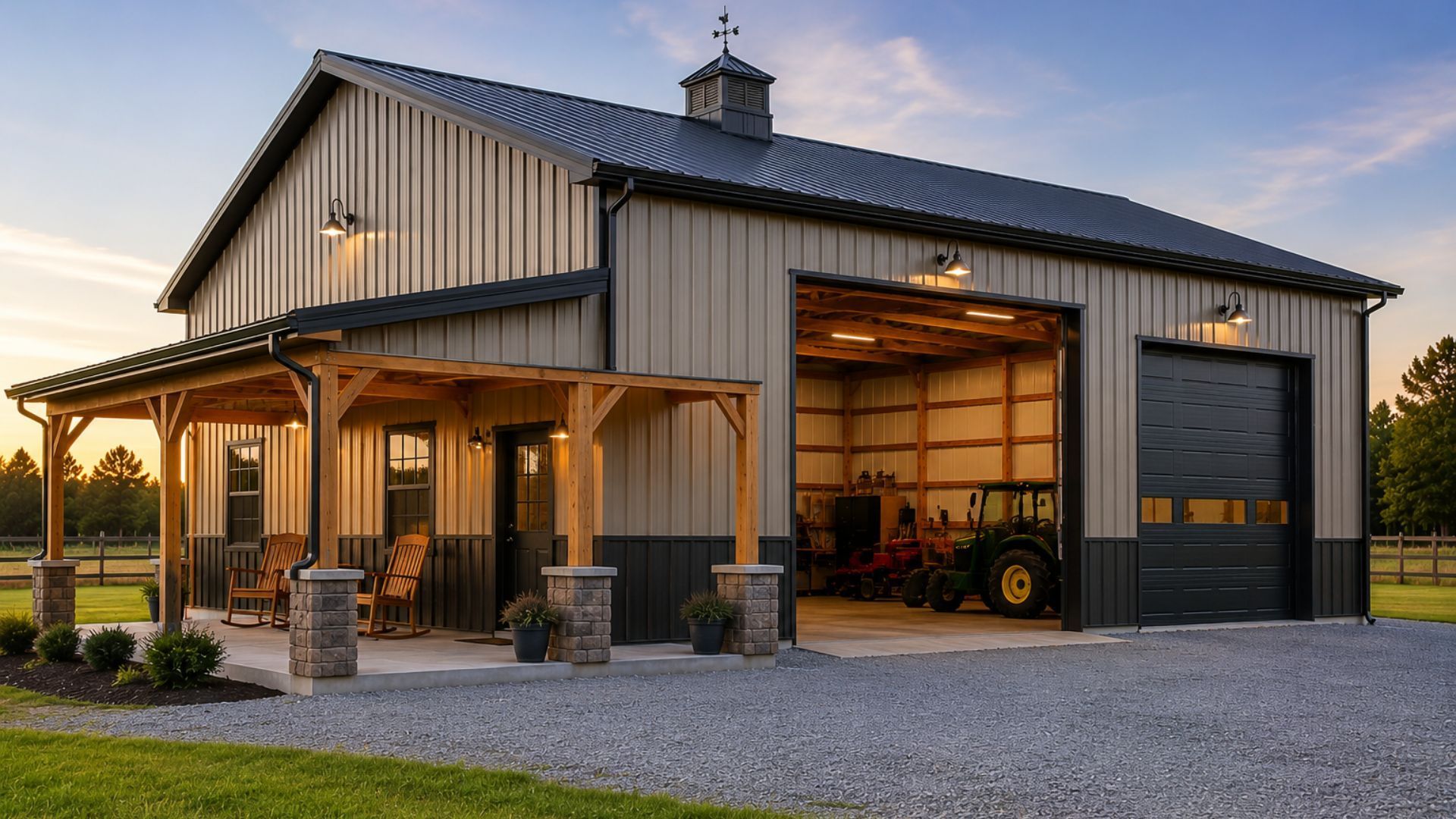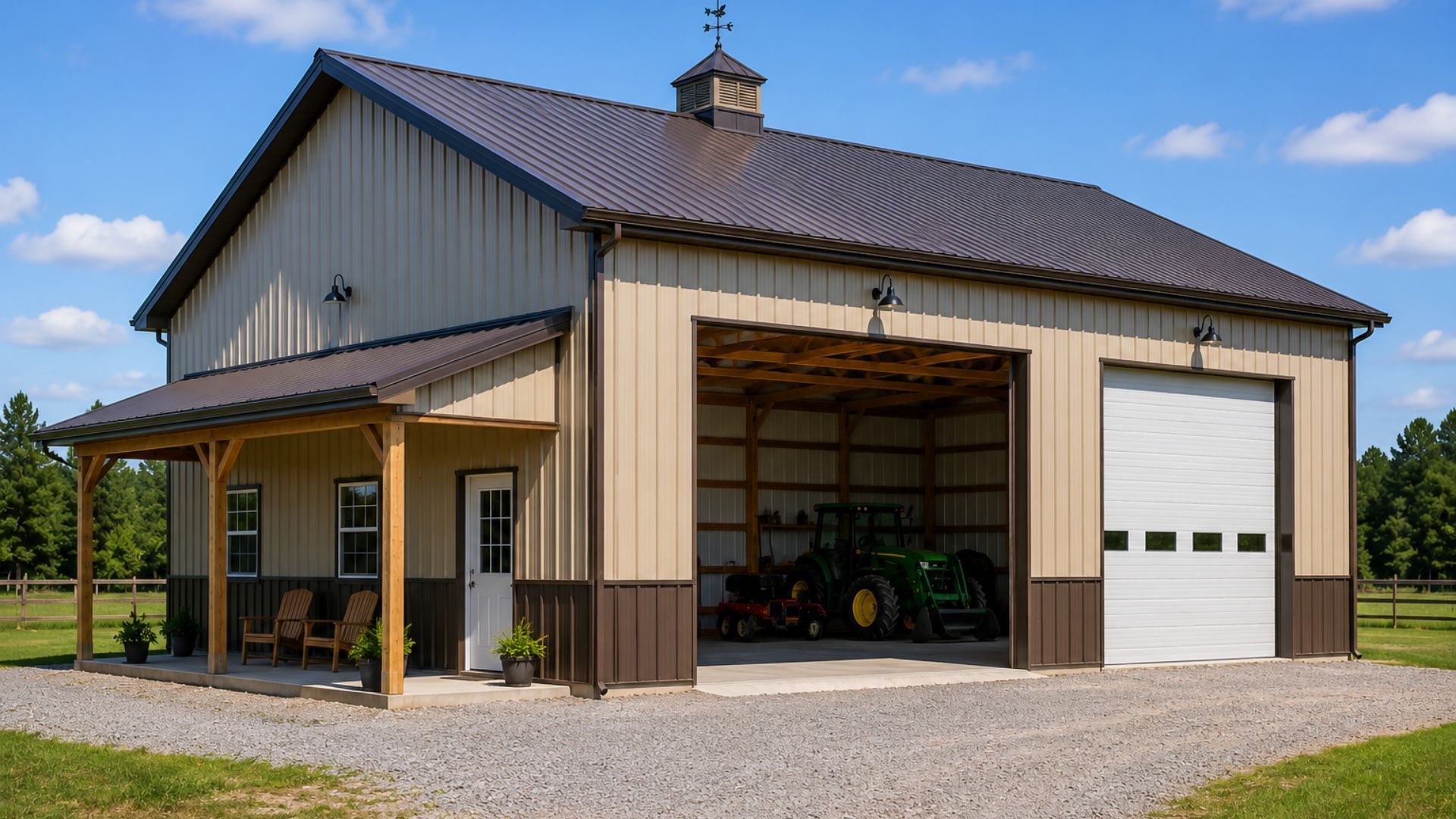
Can pole barns handle heavy snow in Spokane?
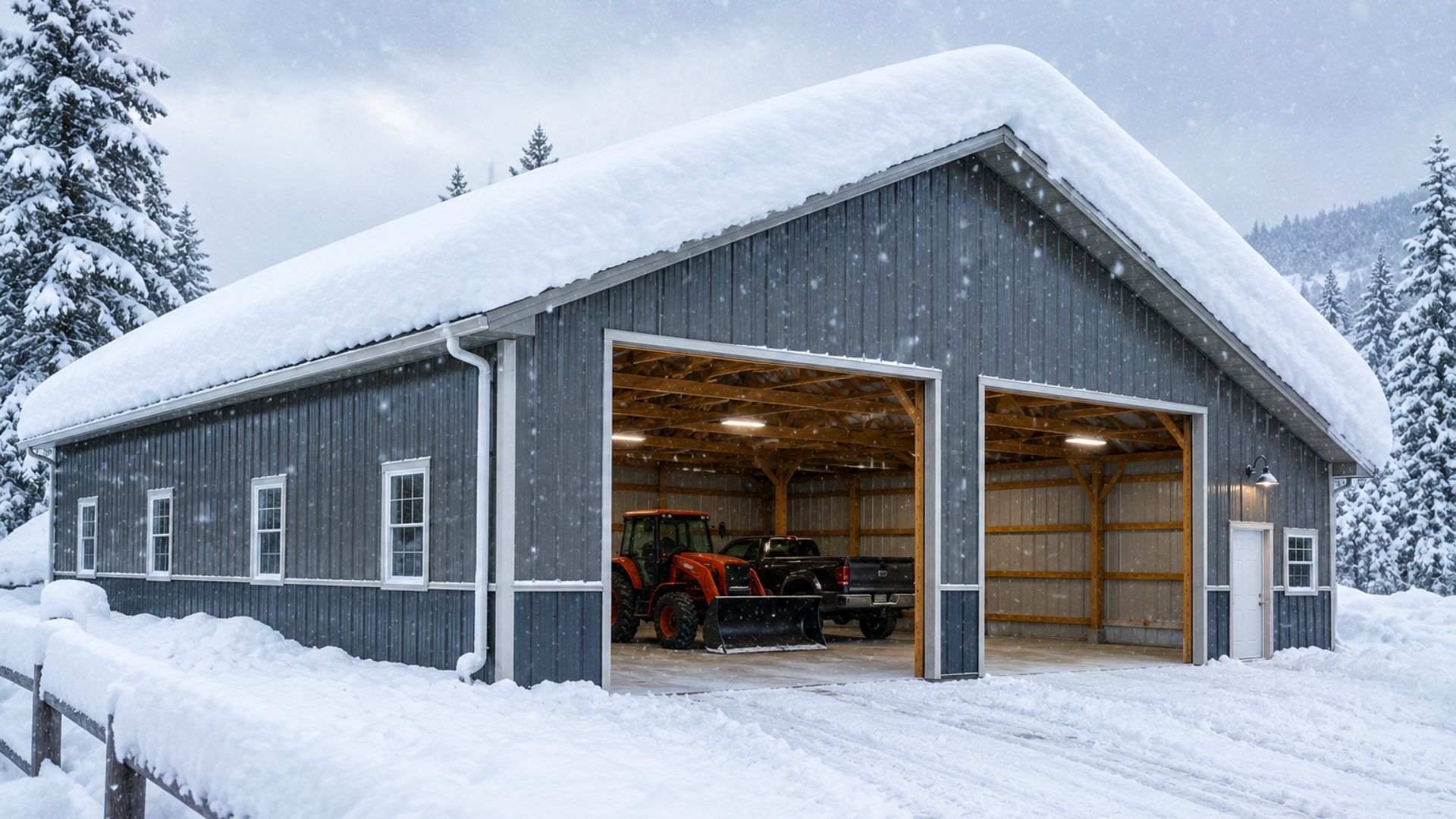
If you've lived through a Spokane winter, you already know our snow isn't the light, fluffy kind that blows off a roof. It piles up, compacts, and gets heavy fast. So it's a fair question: can pole barns handle heavy snow in Spokane, or are you better off with something else?
The short answer is yes — a properly engineered pole barn handles our regional snow loads just as reliably as any other building type. But that word "properly" is doing a lot of work. At Spokane Pole Barn Builders, snow load engineering is built into every project from day one, because in the Inland Northwest it isn't optional.
Here's what actually determines whether a pole barn stands up to a heavy winter.
Quick Answer: Yes, When Built to the Right Snow Load
A pole barn's ability to handle heavy snow has almost nothing to do with the fact that it's a pole barn. It comes down to three things:
- The snow load it was engineered for — measured in pounds per square foot (PSF)
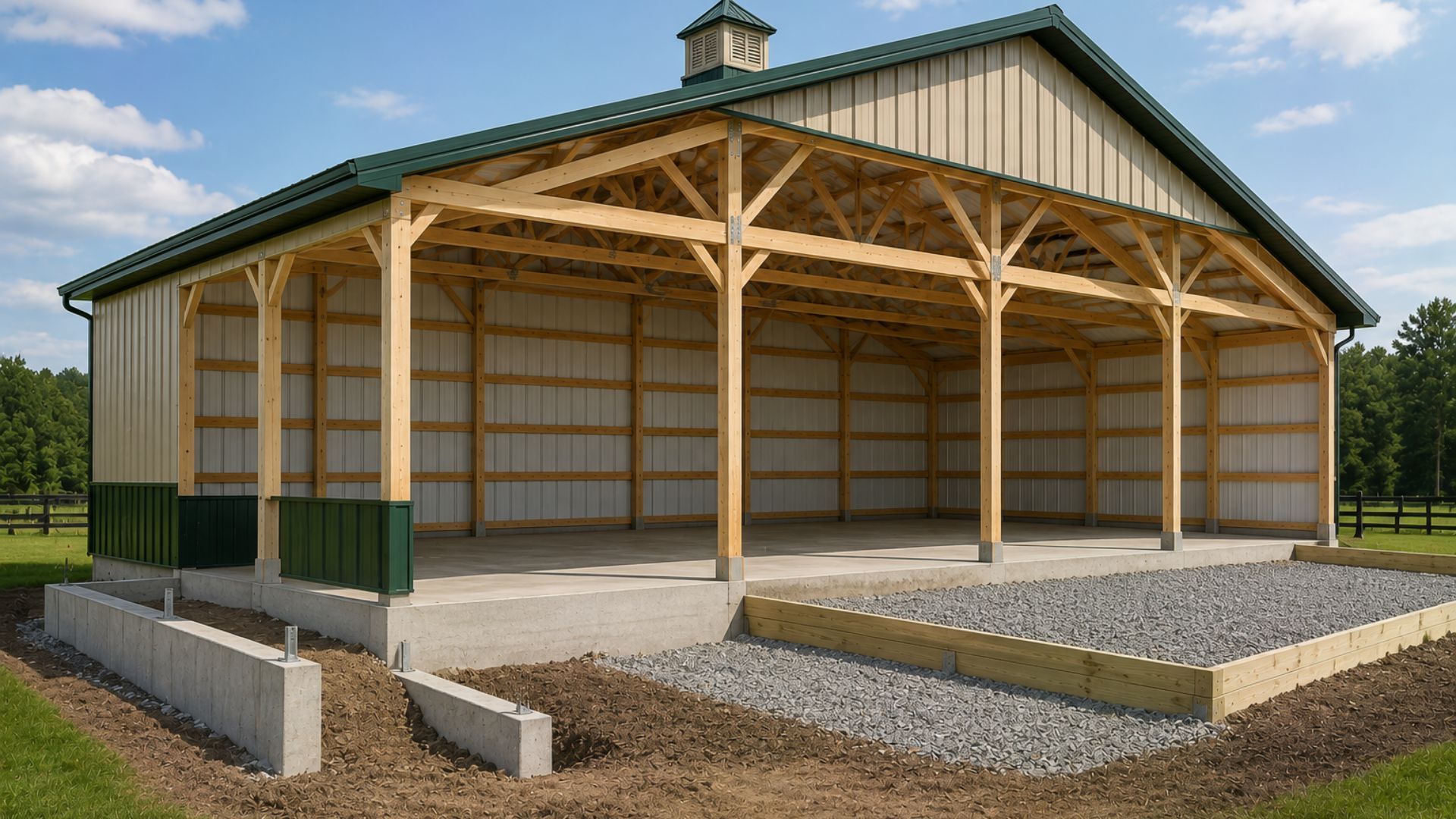
- The truss design and spacing — how the roof structure distributes weight down to the posts
- The quality of construction — whether it was built to the engineered specification, or cut corners
A pole barn engineered for Spokane's snow load will outperform a poorly built metal building every time. The frame material matters far less than the engineering behind it.
Understanding Snow Loads in the Spokane Area
Snow load is the weight that accumulated snow places on a roof, expressed in pounds per square foot. Building codes assign minimum required snow loads based on geography and elevation, and the Inland Northwest sits well above the national average.
A few things make our region demanding:
- Elevation variation — Requirements differ significantly between valley floor properties and higher-elevation land outside the city.
- Wet, compacted snow — Snow that melts and refreezes weighs substantially more than fresh powder.
- Multi-storm accumulation — Snow that doesn't fully melt between storms compounds the load.
- Drifting — Wind pushes snow into deeper piles against walls, valleys, and lower roof sections.
Your required snow load depends on your specific parcel, which is why a builder who works locally every day is worth more than a generic online building kit.
How Pole Barns Are Engineered for Heavy Snow
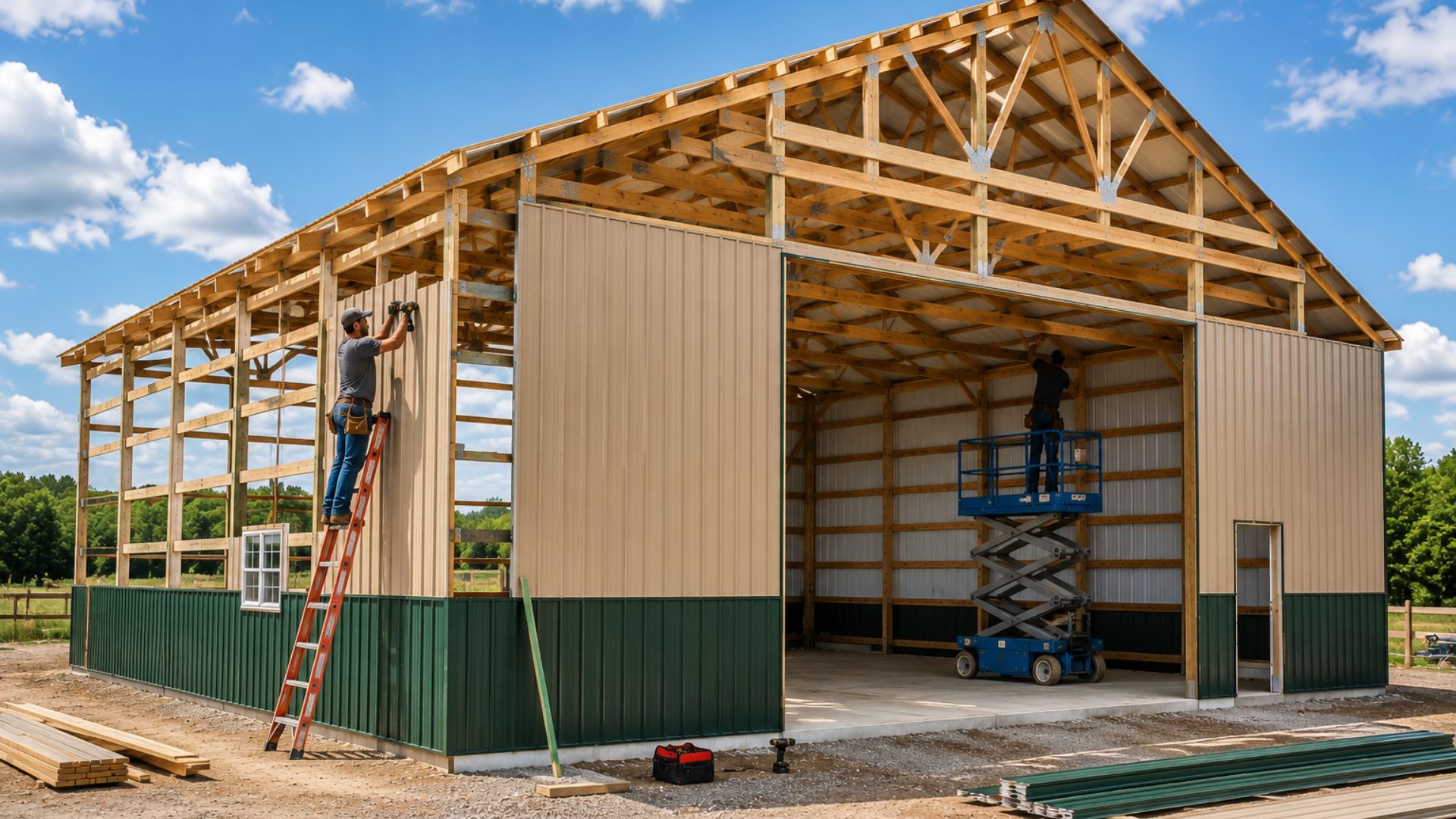
Truss Design and Spacing
Roof trusses carry the snow load down into the posts. For heavy snow areas, trusses are engineered with heavier lumber, additional webbing, and tighter spacing. A building rated for 25 PSF and one rated for 60 PSF can look nearly identical from outside — the difference is entirely in the engineering.
Post Size and Embedment Depth
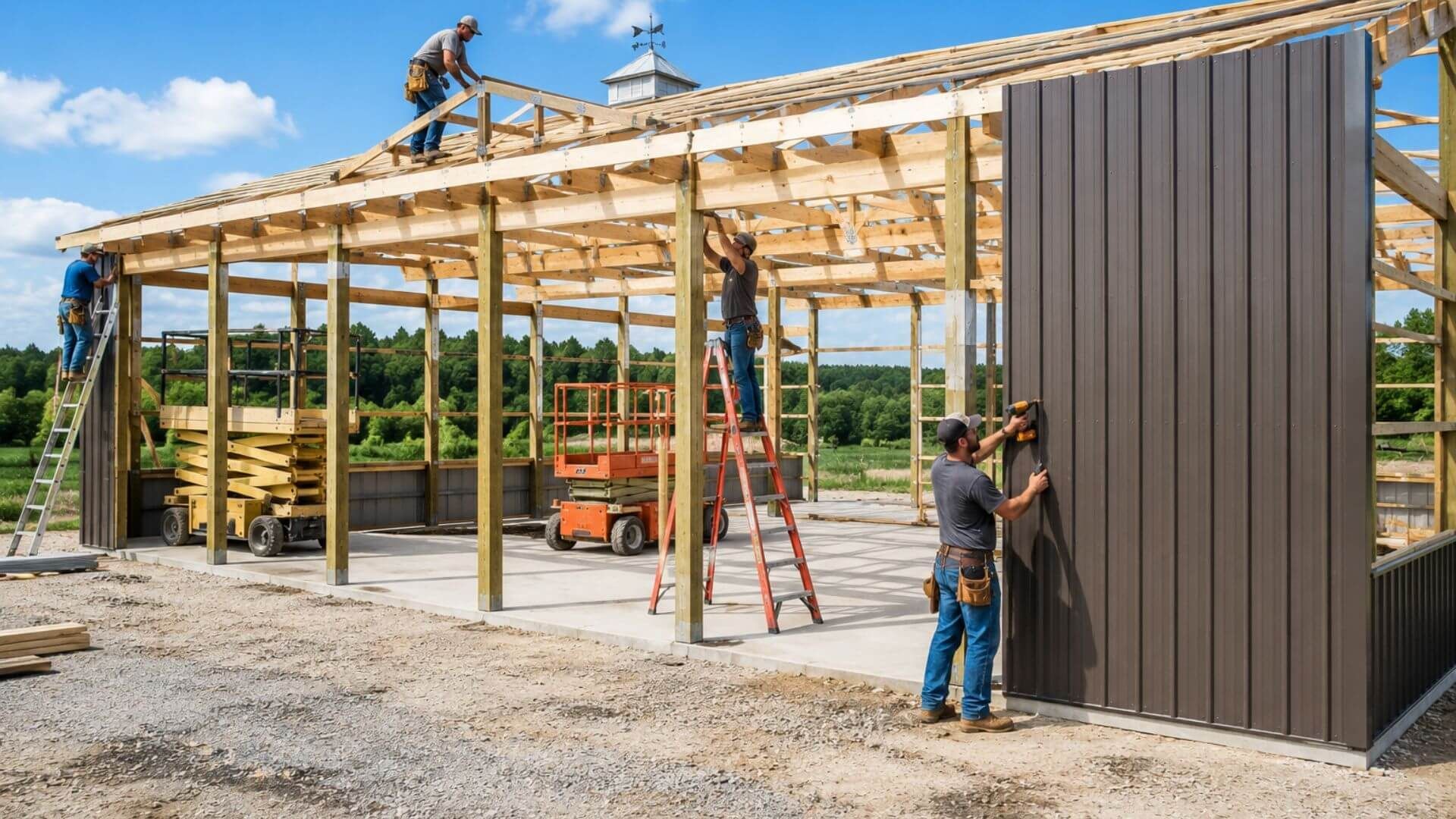
Snow load travels down the trusses and into the posts, which means the posts have to be sized for that load and set deep enough to resist frost heave. Undersized or shallow-set posts are one of the most common failure points in cheap builds.
Roof Pitch
A steeper pitch helps snow shed naturally instead of accumulating. That said, pitch alone doesn't solve the problem — a steep roof still needs proper engineering, because snow rarely slides off as cleanly as people expect.
Metal Roofing Panels
Metal roofing sheds snow better than most alternatives, especially on a well-pitched roof. Gauge matters here: thicker panels resist denting and deformation under load and ice.
Signs a Pole Barn Wasn't Built for Snow
If you already own a pole barn and you're not sure it was engineered correctly, watch for:
- Sagging or bowed roof lines — Especially visible mid-span between trusses
- Cracking or splitting at truss connections — A serious warning sign
- Doors that stick or won't close in winter — Often a sign the frame is deflecting under load
- Posts shifting or heaving — Indicates inadequate footing depth
- Visible gaps opening at wall-to-roof connections
If you spot any of these, get a professional inspection before the next heavy storm. These problems get worse, not better.
Practical Tips for Snow Season
Even a well-engineered pole barn benefits from basic winter care:
- Keep drifts cleared from lower roof sections where snow accumulates deeper than the rest of the roof
- Don't stack snow against exterior walls when plowing your driveway
- Check the roof after major storms, particularly following wet snow or ice events
- Clear snow from around doors so they open and close without forcing the frame
- Never climb onto a loaded roof — hire a professional if snow removal is needed
Why This Is Worth Getting Right the First Time
Snow load engineering is not a place to save money. Upgrading a truss package during design costs a fraction of what it costs to repair, reinforce, or replace a failed roof later — and a collapse can take your equipment, vehicles, or inventory with it.
This is where working with an established local team pays off. The best pole barn builders in Eastern Washington don't guess at snow loads or apply a one-size-fits-all truss package. They engineer to your specific site, elevation, and intended use.
That matters even more for pole barn homes and barndominiums, where the structure isn't just protecting equipment — it's protecting your family.
Why Choose Spokane Pole Barn Builders
- Snow load engineering on every build — Not an upgrade or an add-on, it's standard practice
- Site-specific design — We account for your elevation, exposure, and drifting patterns, not just a regional average
- Licensed and permitted — We handle code compliance so your building meets or exceeds local snow load requirements
- Quality materials — Properly sized posts, engineered trusses, and heavier-gauge metal roofing
- Transparent pricing — You'll see exactly what your truss package and structural specs cost upfront
- Local track record — We're among the top-rated pole barn services in Spokane, WA, with buildings that have weathered a lot of winters
Frequently Asked Questions
Can pole barns handle heavy snow in Spokane?
Yes. A pole barn engineered to the correct snow load for your specific site handles Spokane-area winters reliably. Performance depends on truss design, post sizing, and construction quality — not on the fact that it's a post-frame building.
What snow load should a pole barn in Spokane be rated for?
It varies by location and elevation within the region. Your builder determines the required rating based on local code and your specific parcel, and building above the minimum is often worth the modest added cost.
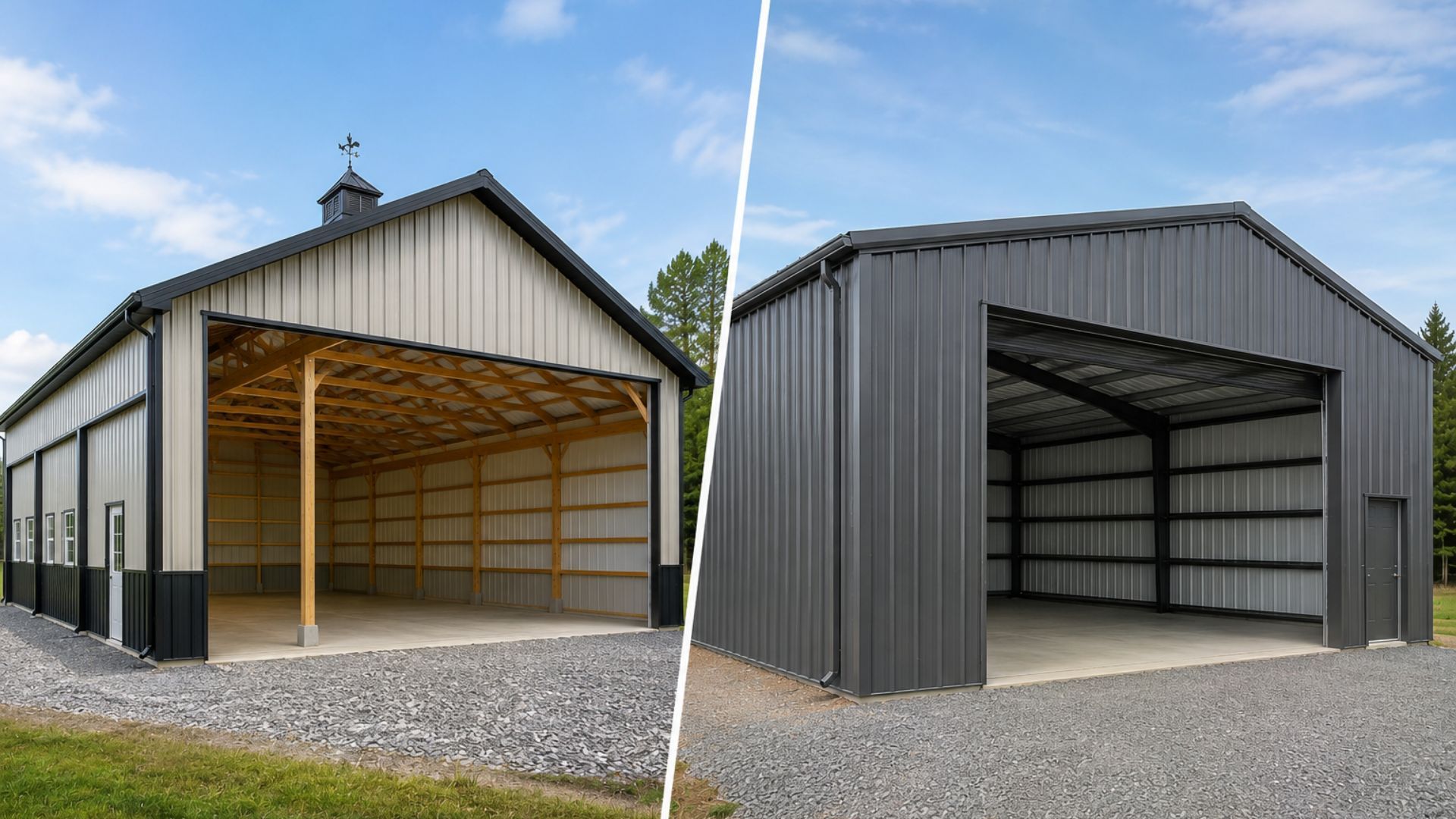
Are pole barns stronger or weaker than metal buildings in snow?
Neither is inherently stronger. Both perform well when engineered correctly and both fail when they aren't. A well-built pole barn and a well-built steel building rated for the same snow load perform comparably.
Do I need to shovel snow off my pole barn roof?
Usually not, if it was engineered properly. Monitor for unusual drifting or accumulation after major storms, and hire a professional if removal is genuinely needed — never climb onto a snow-loaded roof yourself.
Does a steeper roof pitch help with snow?
It helps snow shed more readily, but pitch doesn't replace proper structural engineering. Both matter, and a steep roof with undersized trusses is still a risk.
The Bottom Line
Can pole barns handle heavy snow in Spokane? Absolutely — when they're engineered and built for it. The frame material isn't what determines whether a building survives a hard winter. Correct snow load calculations, properly sized trusses and posts, and quality construction are what keep a roof overhead where it belongs.
Build a Pole Barn That's Ready for Winter
Don't gamble on a building that wasn't designed for Inland Northwest snow. Spokane Pole Barn Builders engineers every structure for the real conditions on your property. Contact us today for a transparent quote and a clear conversation about the snow load your project needs — and get a building you won't have to worry about come January.